
 EN
EN
 ar
ar bg
bg hr
hr cs
cs da
da nl
nl fi
fi fr
fr de
de el
el hi
hi it
it ko
ko no
no pl
pl pt
pt ro
ro ru
ru es
es sv
sv tl
tl iw
iw id
id lv
lv lt
lt sr
sr sk
sk sl
sl uk
uk vi
vi et
et hu
hu th
th tr
tr fa
fa ms
ms hy
hy ka
ka ur
ur bn
bn mn
mn ta
ta kk
kk uz
uz ku
ku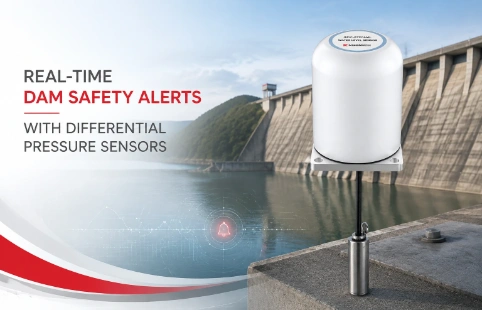
Real-Time Dam Safety Alerts with Differential Pressure Water Level Sensors
Key Takeaways An alert chain needs more than a sensor: define field in...

Multichannel Dynamic Signal Acquisition System for Field Monitoring
Engineers monitoring a bridge’s structural health often need to track strain gauges, accelerometers, and displacement sensors at the same time. A multichannel dynamic signal acquisition system turns these scattered measurements into a synchronized dataset. Kingmach builds these systems specifically for geotechnical and structural monitoring, where long-term stability and multi-sensor handling matter more than benchtop specs. Our approach focuses on modular channel expansion, front-end signal conditioning that matches industry-standard sensors, and packaging that holds up to damp excavations and sun-exposed instrument huts. Instead of a single fixed box, you get a configuration that matches the cabling and sensor types already planned on site. That means less time chasing ground loops and more time with clean time-synchronized data ready for modal analysis or threshold alerting.
Technical Detail
Kingmach’s multichannel dynamic signal acquisition systems grow out of two decades of supplying instruments to civil engineering projects. The hardware commonly starts with a base unit field-configurable for 8, 16, or 32 channels, each able to handle ICP accelerometers, full-bridge strain gauges, or voltage output transducers without swapping modules. Front-end antialiasing filters follow the sampling rate you pick, not a fixed list, so the same unit can capture bridge vibration at 2 kS/s and then slow down for thermal drift measurements overnight. Channels stay synchronous within microseconds—important when you’re running operational modal analysis on a cable-stayed bridge. Connectivity runs through shielded RJ45 or fiber-optic ports, allowing the system to live near the sensors while the data travels hundreds of meters to a control PC in the site office. Because many monitoring setups are one-off, Kingmach also supplies custom break-out boxes, sensor excitation voltages, and even integrated NTP or GPS time stamping if correlation with other data loggers is needed. All units are assembled in-house, and calibration sheets traceable to national standards ship with every order. Global distributors carry common accessories, and our application engineers can log into a system remotely to help troubleshoot setup issues in odd-hour construction windows.
News
Key Takeaways An alert chain needs more than a sensor: define field in...
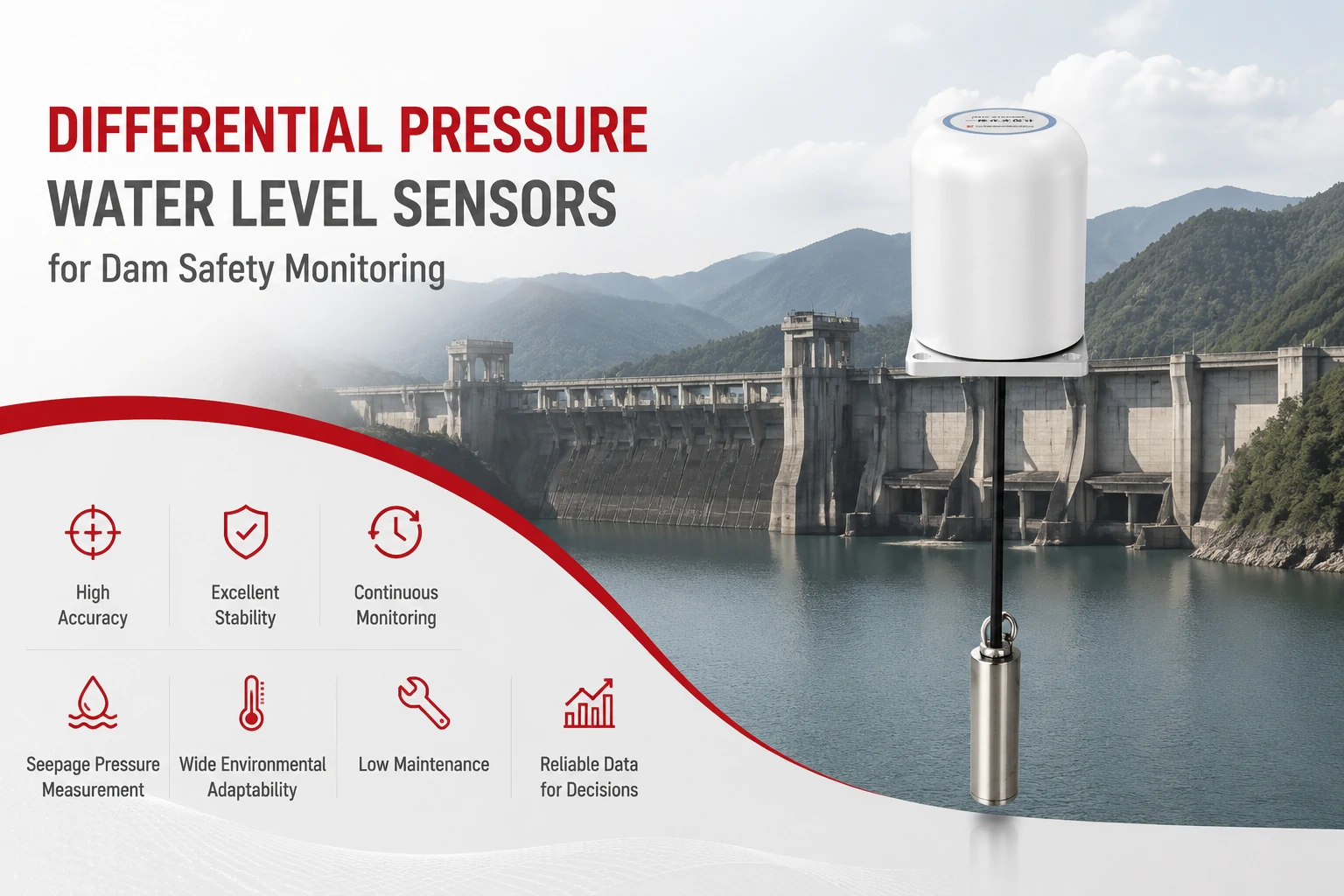
Key Takeaways The strongest fit is usually a confined, submerged, or s...
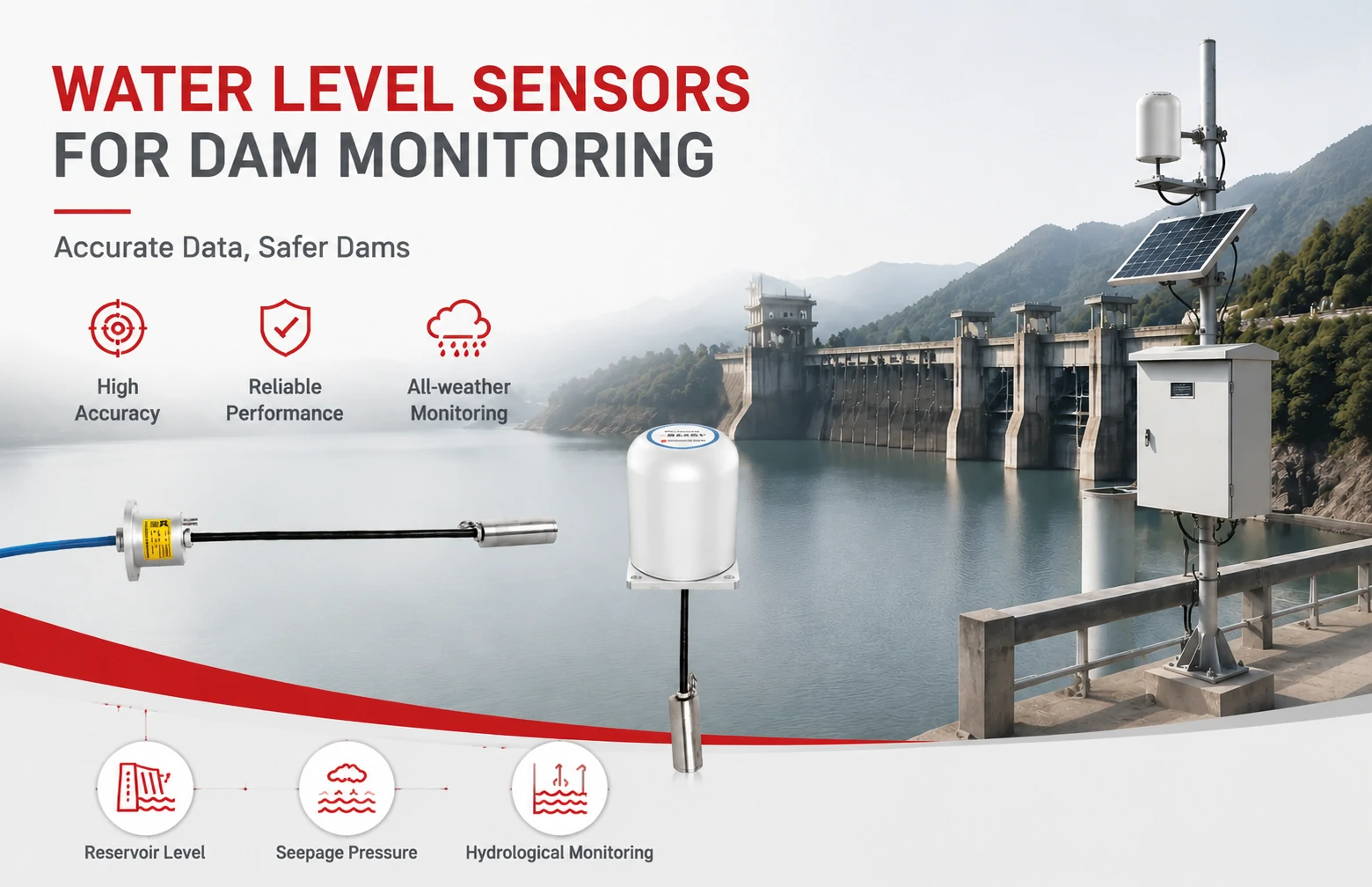
Kingmach Water Level Sensors for Dam Monitoring: A Buyer's Guide to Differential Pre...
Products
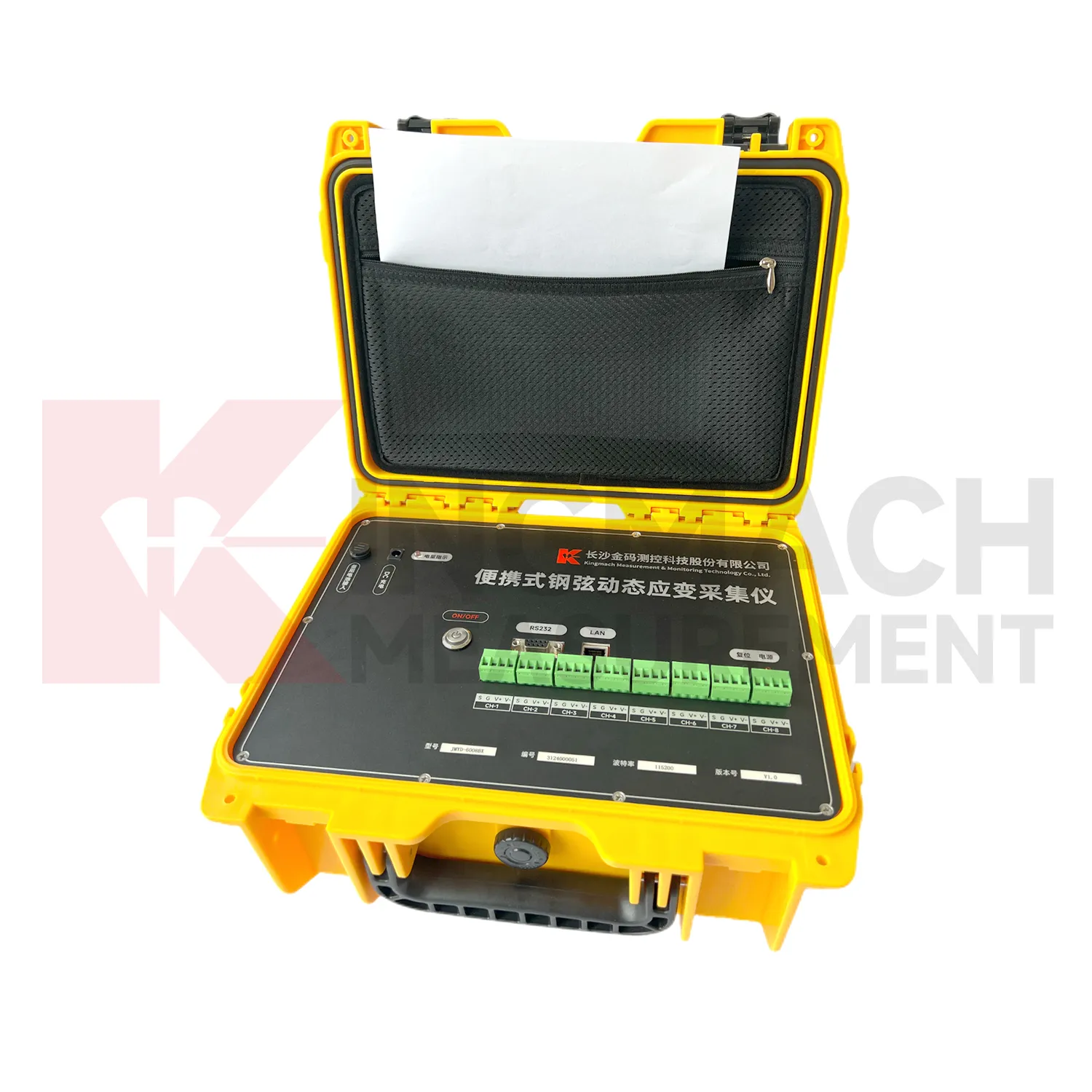
Portable Vibrating Wire Dynamic Strain Acquisition Readout JMYD-6008BX
View Details
FAQ
Start with the sensor count and add 20% for spares or later expansion. A single span often uses 12–16 channels for accelerometers and strain gauges, but a full structural health monitoring system across several piers can push beyond 48 channels. Kingmach units can be linked, so you don’t have to overbuy upfront.
Our signal acquisition boxes are built for IP65 sealed enclosures and tested from -20°C to 65°C. For sites in tunnels or on bridge piers, we add conformal coating and desiccant packs at no extra charge. Just don’t submerge them permanently; they’re weatherproof, not submarine-rated.
Yes. You can have strain gauges on channels 1–4, ICP accelerometers on 5–12, and a displacement pot on channel 13, all sampled at the same rate. If you need different sample rates, separate channel groups can be configured with independent filters.
Our systems talk Modbus TCP and provide a real-time streaming binary protocol. Most customers pipe data into MATLAB, LabVIEW, or their own SCADA. We provide ready-to-use drivers and an open-source Python library for reading the binary stream. No locked-in annual license fees.
Each channel leaves the factory with a traceable calibration certificate. Annual recalibration is recommended but not mandatory; typical drift is under 0.1% of full scale per year. We offer a swap-out service where we ship a freshly calibrated unit before you send yours back, keeping downtime to an afternoon.
Share your product type, target capacity, and application requirements. Our team can review the details and recommend a practical next step.
If you are interested in our products or want to become our partner.
Please leave your contact information, our team will contact you as soon as possible.
Mail: [email protected]
Contact Us: +8613808434127
Address: No. 188 Tongzipo West Rd, Changsha, Hunan, China