
 EN
EN
 ar
ar bg
bg hr
hr cs
cs da
da nl
nl fi
fi fr
fr de
de el
el hi
hi it
it ko
ko no
no pl
pl pt
pt ro
ro ru
ru es
es sv
sv tl
tl iw
iw id
id lv
lv lt
lt sr
sr sk
sk sl
sl uk
uk vi
vi et
et hu
hu th
th tr
tr fa
fa ms
ms hy
hy ka
ka ur
ur bn
bn mn
mn ta
ta kk
kk uz
uz ku
ku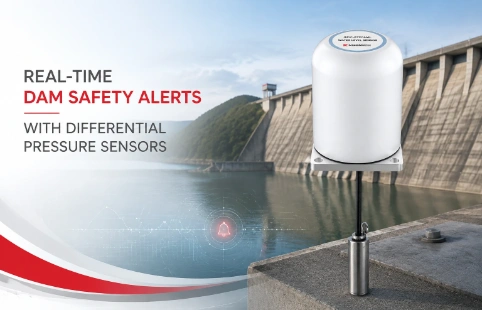
Real-Time Dam Safety Alerts with Differential Pressure Water Level Sensors
Key Takeaways An alert chain needs more than a sensor: define field in...

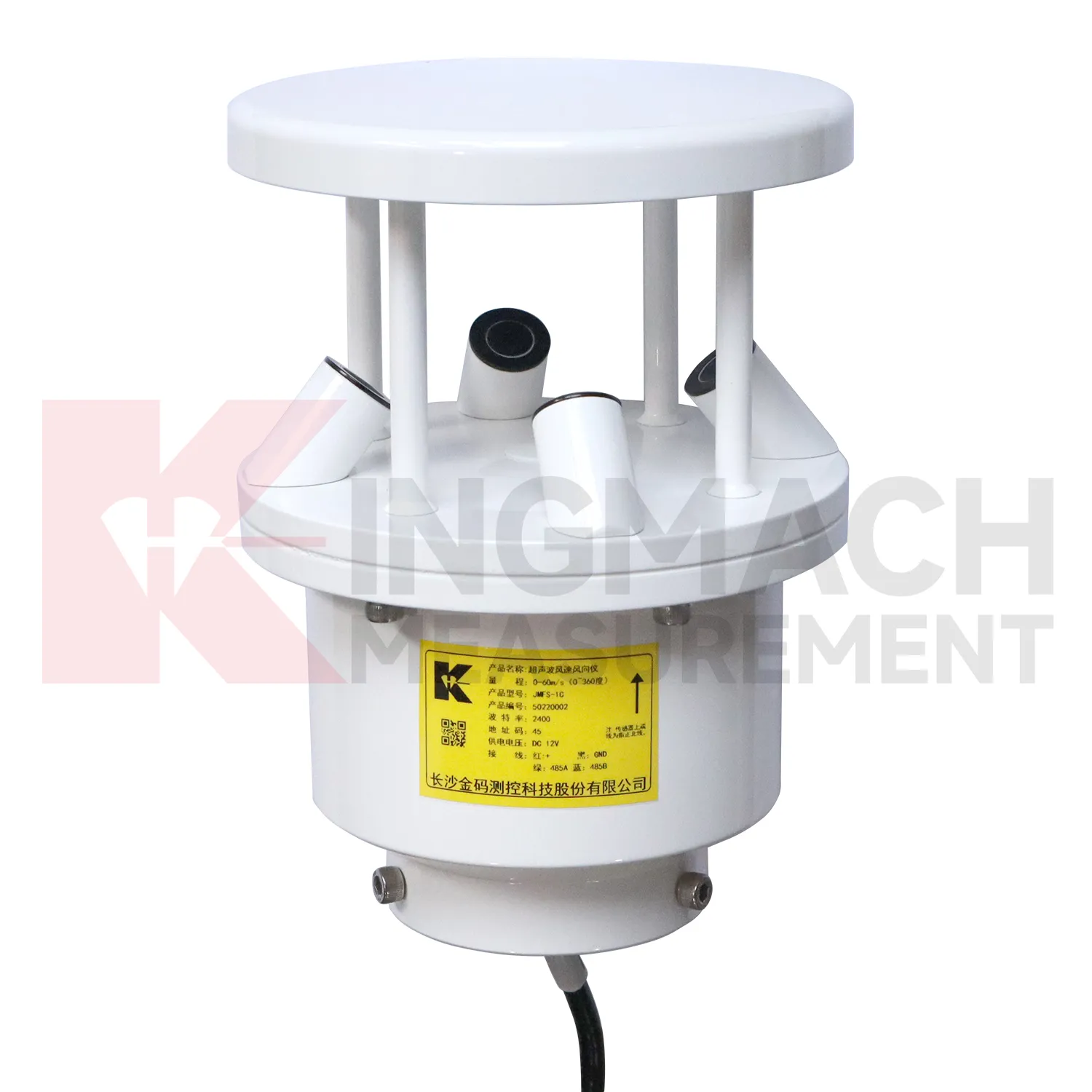
Ultrasonic Wind Speed and Direction Sensor with Zero Moving Parts
When a coastal weather station needed wind data that wouldn’t quit during salt storms and freezing rain, the old cup and vane anemometers kept seizing up. The switch to an ultrasonic wind speed and direction sensor changed everything – no spinning parts means nothing to ice over or wear out. Kingmach, a professional geotechnical instrument manufacturer, builds these sensors for exactly that kind of reliability. With a wide range covering everything from compact agricultural units to heated models for high-latitude winds, they’re designed to keep reporting when conditions get ugly. And because every monitoring project has its own quirks, customization on connector types, output protocols, or mounting solutions is standard practice here – not a special favor.
Technical Detail
Kingmach’s ultrasonic wind speed and direction sensor relies on the time-of-flight principle between transducers. That means no mechanical bearings to maintain and no calibration drift from dust or salt buildup. Output options usually include RS-485, RS-232, or analog signals, and many models can stream data at 1–4 Hz without extra polling – handy when you’re capturing gust fronts. Field reports often highlight the heated transducer design; it keeps the acoustic path clear in freezing rain, which is where mechanical sensors drop out. For system integrators, the sensor can spit out standard NMEA wind sentences alongside custom ASCII formats, so plugging it into existing loggers or SCADA rarely takes more than a configuration line or two. Because Kingmach operates as a mid-tier professional manufacturer, you’re not stuck with off-the-shelf specs: cable lengths, mounting brackets, and even the sensor body material can be adapted to fit a specific site layout. Their global distribution network also means local technical support and spare parts aren’t an afterthought. Typical applications range from meteorological towers and bridge health monitoring to microgrid weather stations and agricultural water management. In all these scenarios, the sensor’s real value becomes obvious after the first year of operation – no bearing replacements, no dead bands at low wind speeds, and no data gaps when it matters.
News
Key Takeaways An alert chain needs more than a sensor: define field in...
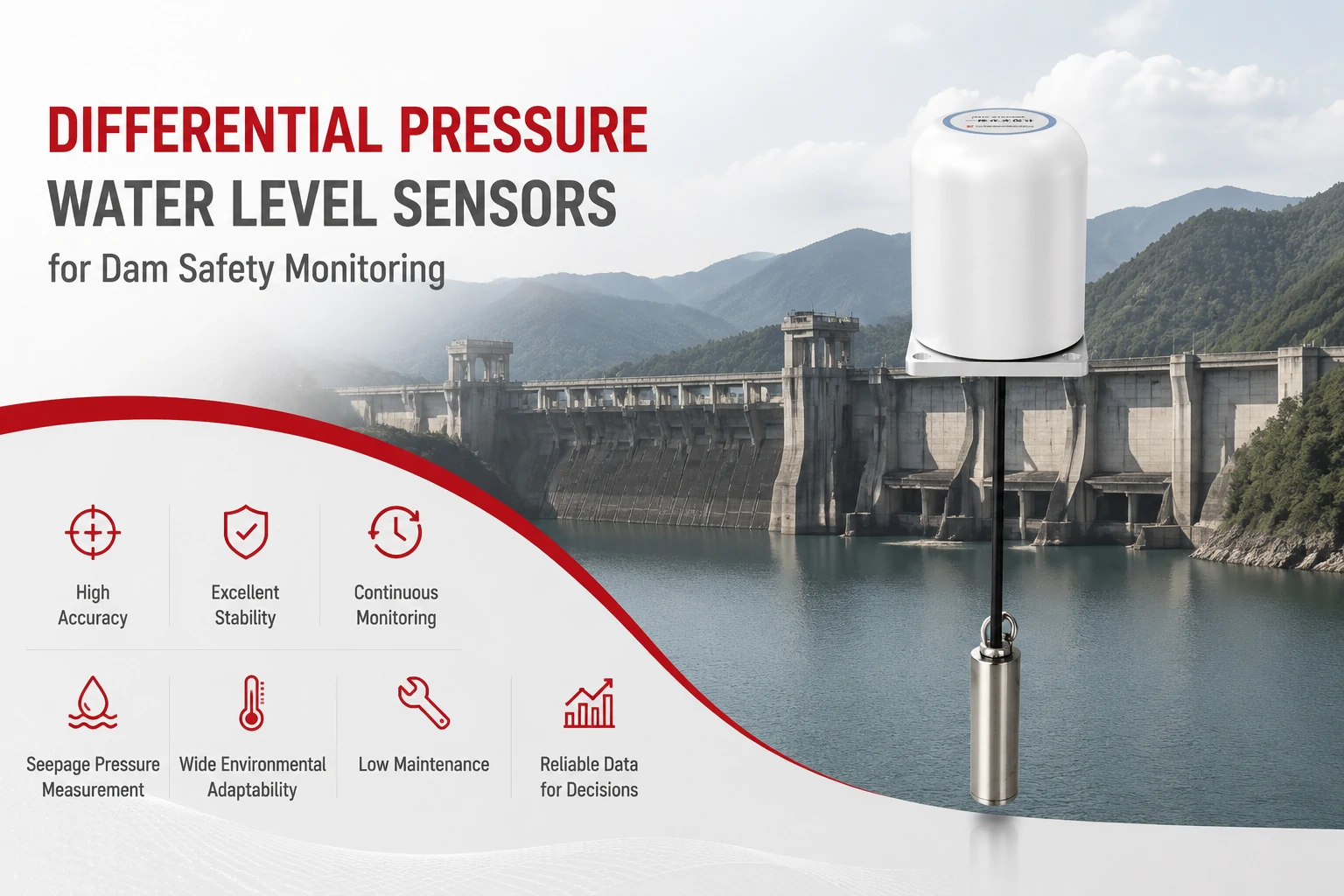
Key Takeaways The strongest fit is usually a confined, submerged, or s...
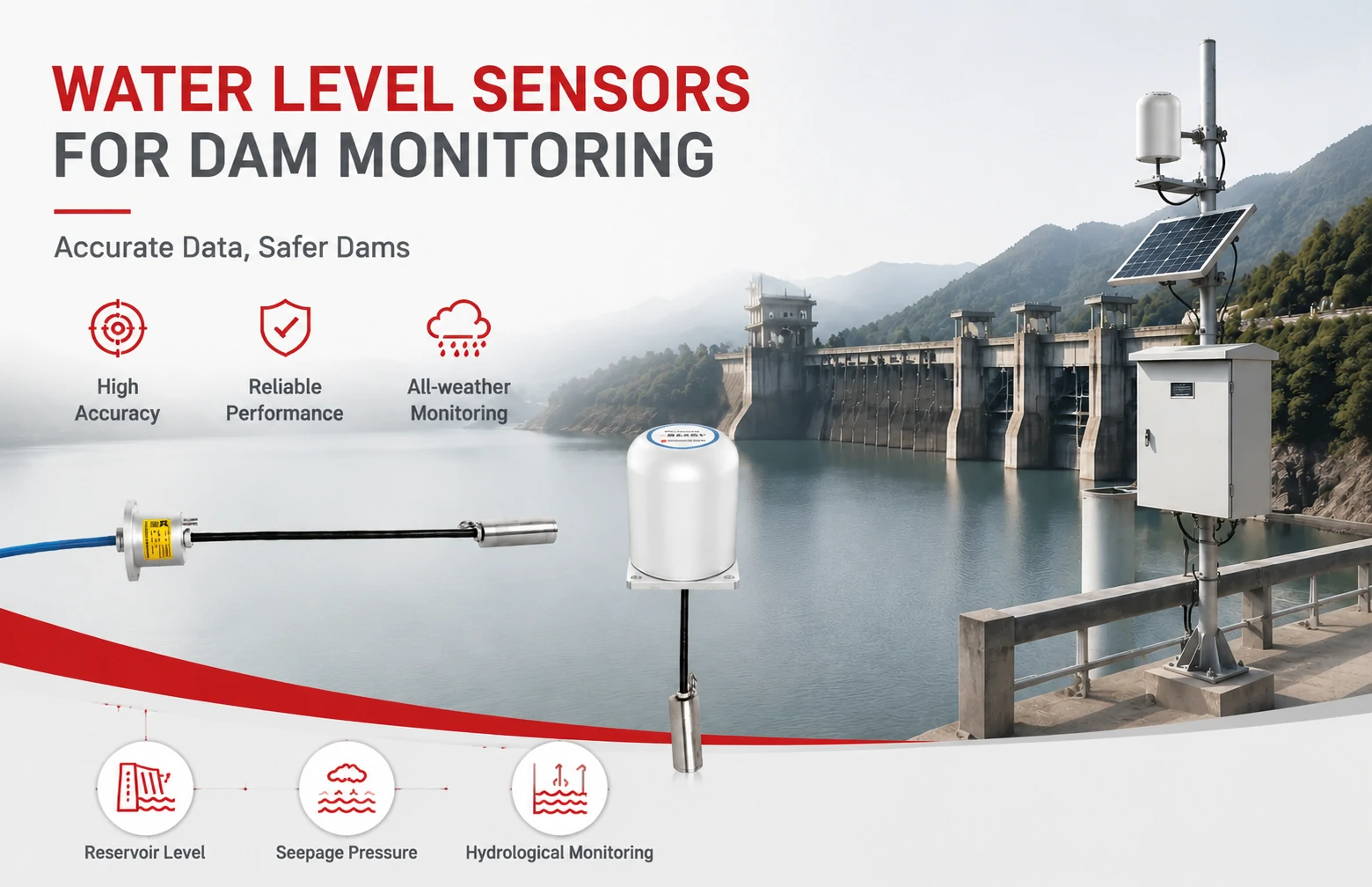
Kingmach Water Level Sensors for Dam Monitoring: A Buyer's Guide to Differential Pre...
Products
Ultrasonic Wind Speed and Direction Sensor JMFS-1C
View DetailsFAQ
A cup anemometer has bearings and rotating parts that wear out, especially in dusty or salty air. An ultrasonic sensor has no moving parts, so the main maintenance is keeping the transducer surfaces clean. That can be done with a periodic wipe-down or, on heated models, by letting the heating element prevent ice buildup. Over a five-year period, total maintenance effort and downtime are typically much lower for ultrasonic sensors.
Many mechanical sensors have a starting threshold where the cups must overcome static friction, often around 0.5–1.0 m/s. Ultrasonic sensors don’t have that mechanical dead zone, so they can report speeds down to 0.01 m/s or even lower in theory. In practice, the usable lower limit depends on the signal processing and installation quality, but you’ll get meaningful data in light-air conditions where a cup sensor would show zero.
Typical outputs are RS-485 with Modbus RTU or ASCII protocols, RS-232, or analog voltage/current loops. Many models also support SDI-12 for low-power environmental stations. If you need a specific protocol like NMEA 0183 for marine applications, Kingmach can usually pre-configure it before shipping. Custom cable pinouts and connector types are also available for project-specific integration.
Yes, heated transducer models are available. The heating element is usually thermostatically controlled, activating around +5°C to prevent freezing. Power consumption during heating can range from roughly 3 to 10 watts depending on the ambient temperature and wind chill, but in normal conditions without heating, the sensor draws under 1 watt. You’ll want to size your solar panel and battery accordingly if the site gets long freezing spells.
The sensor needs a clear fetch in all directions. The standard recommendation is to mount it on a mast at least 10 times the diameter of the nearest obstruction away from that obstruction – so if you have a 20 cm wide pole, the sensor should be at least 2 meters away. Using a sturdy, vibration-free mount is also important, since ultrasonic measurements rely on accurate time-of-flight detection and mechanical wobble can introduce noise.
Share your product type, target capacity, and application requirements. Our team can review the details and recommend a practical next step.
If you are interested in our products or want to become our partner.
Please leave your contact information, our team will contact you as soon as possible.
Mail: [email protected]
Contact Us: +8613808434127
Address: No. 188 Tongzipo West Rd, Changsha, Hunan, China